Strategy #1: “A Running Start”
Over the last few months, members of the Circle of Champions have been working on ranking priorities and creating a number of strategies to help move the Athabasca Grown project forward, after the feasibility report laid out many options to consider.
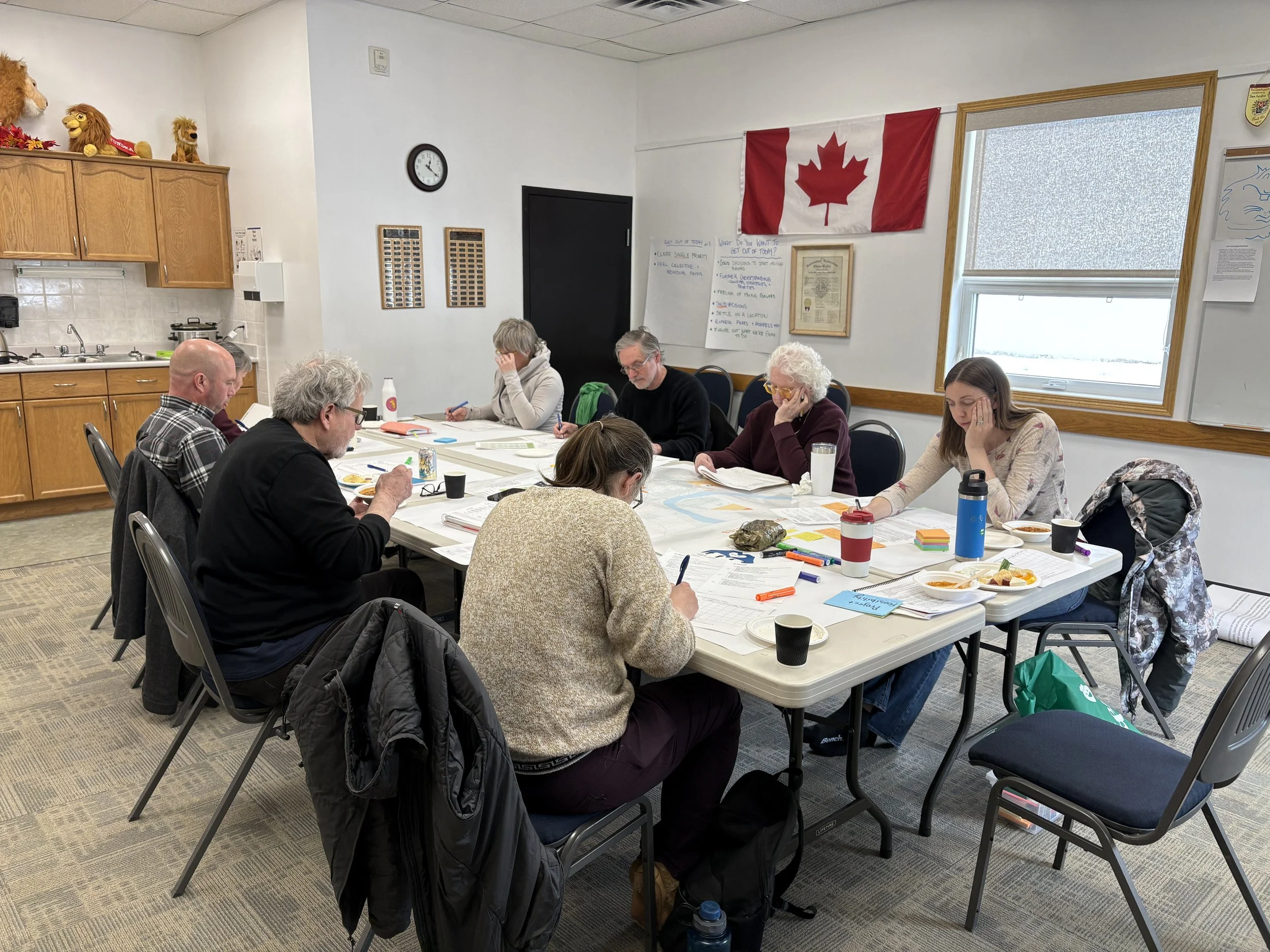
Working with Juli Rohl of Revivis Consulting, the final decision-making workshop was held April 24. The classic Athabasca Grown meal of chili and coffee fueled the day, and the group systematically evaluated which path to commit to.
…Drumroll please…
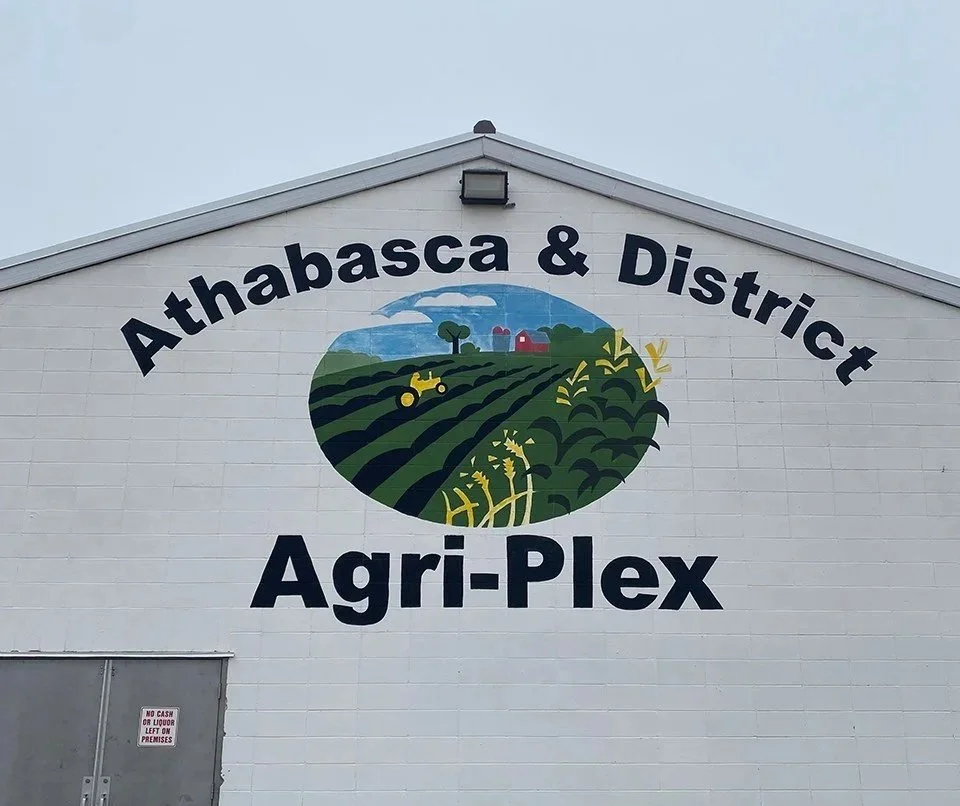
The Athabasa Grown members have formally formed a Committee of the Athabasca District Agricultural Society with plans to build the three-season upside-down greenhouse at the Agri-plex grounds!
The site offers an existing barn and many useful amenities. The barn could be used for the header room, wash station, produce storage and plant starts; and the site includes ample parking, meeting space, washrooms and an approved kitchen.
The values and goals of the two organizations are closely aligned. The Agricultural Society has long been a pillar of agriculture in the area and is seeing new energy through its developing community garden and food forest. This collaboration builds on that momentum, creating shared spaces and initiatives that bring people together around food, learning, and community.
The greenhouse building is planned to include a combination of low-carbon and conventional building materials materials, leveraging wood and locally sourced material where possible.
The greenhouse intends to ultimately have an annual net zero energy use with solar panels installed when budget allows. The growing style will be open to a combination of soil beds or soilless growing, but a firm stop at sprayed pesticides.
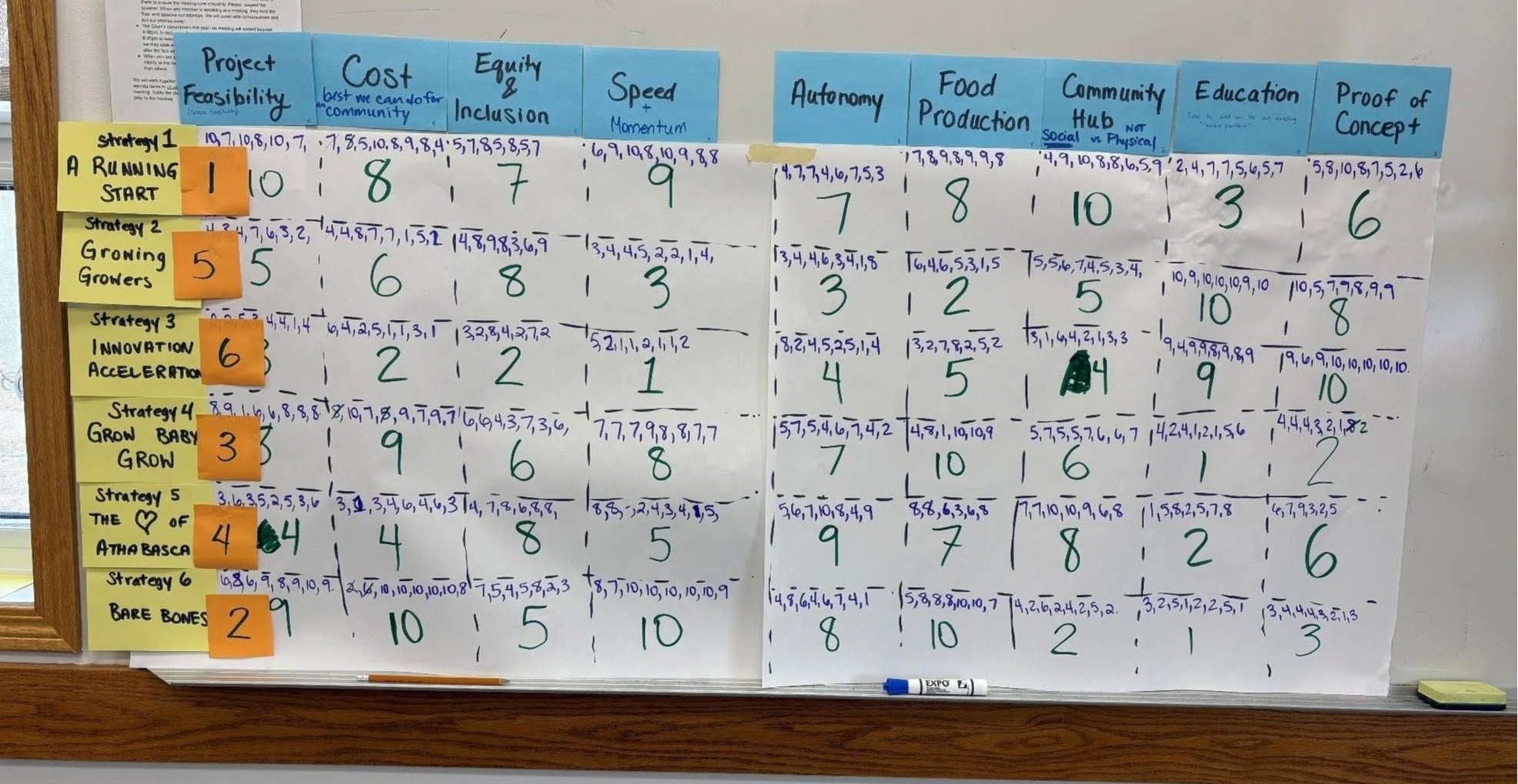
During the discussions at the workshop, it was decided the top four priorities for the project are scope, food production, speed & momentum, and cost. Others of importance are community hub, equity and inclusion, education, autonomy and proof of concept.
Evaluating strategies against priorities, individually and then as a group, gave participants the opportunity to ask questions, raise concerns, listen to others’ opinions, logic, and rationale and come together to a decision to build a greenhouse and beginning food production as soon as possible.
The next immediate steps are to celebrate this decision, to build excitement, to enlarge the Circle of Champions and begin fundraising for the greenhouse.
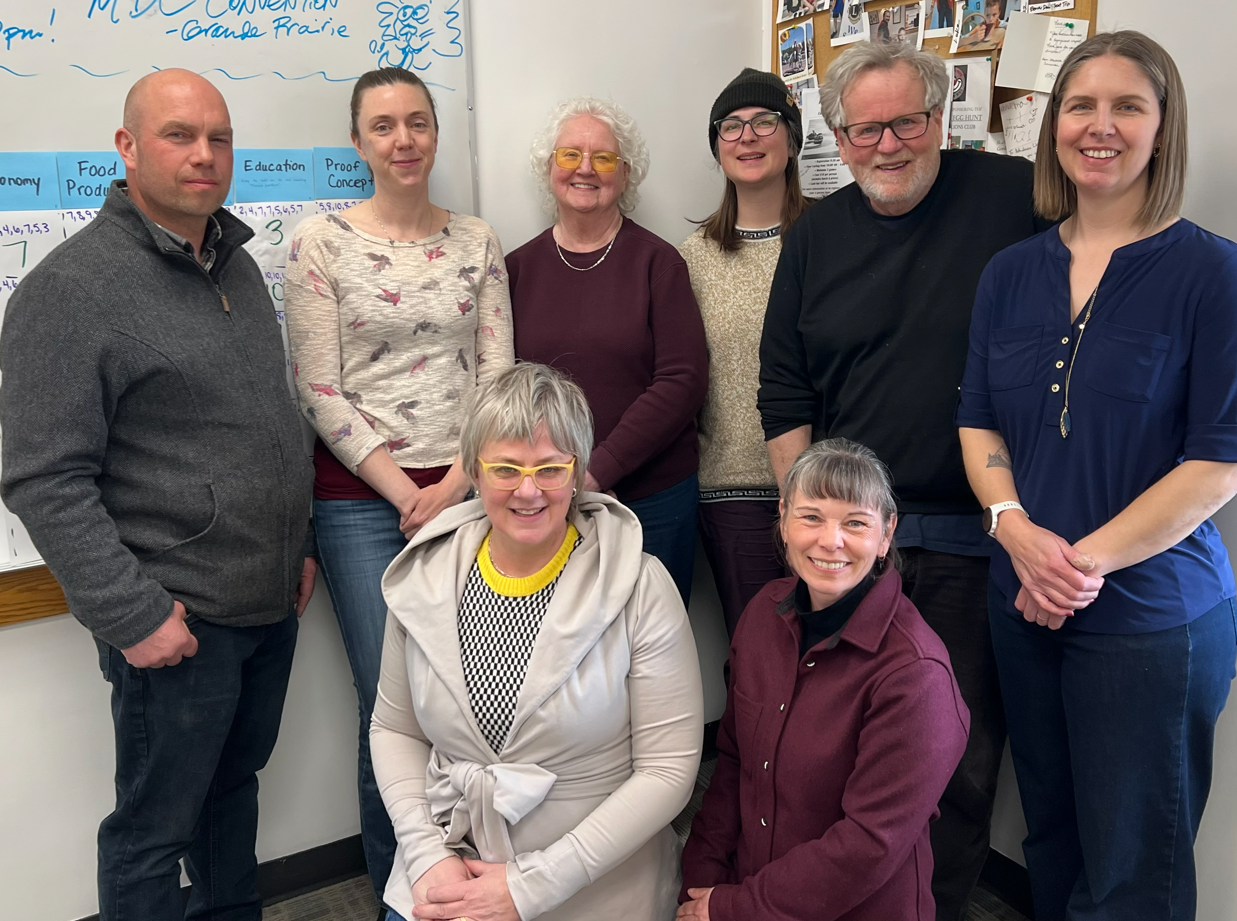
Want to be involved? Our group meets monthly and ad-hoc, reach out to info@athabascagrown.ca and see where your contributions could help!